21/10/2026 06:31
Does the Excerpt Show the Whole Step? YouTube Clips for Cambodian Napkin-Folding Workshops

A beautiful finished napkin can attract attention without teaching anyone how to make it. For a Cambodian workshop promoting table-setting lessons to café teams, catering staff or individual learners, the useful moment may be the small hand movement that makes a fold work. Sharing that moment requires care: an excerpt that starts too late can hide the preparation, while one that ends too early can leave the learner guessing. This guide explains how to choose and test a YouTube Clip around one complete step, connect it to an honest workshop invitation, and assess the response before considering any SMM-panel service.
1. Choose the learner’s question before choosing the excerpt
Start with a question someone could answer by watching a short demonstration. For napkin folding, useful questions include which corner moves first, where the opening should face, or how to hold the base while lifting the fabric. These questions give the excerpt a clear purpose. A general request to make the workshop look exciting gives the editor much less guidance.
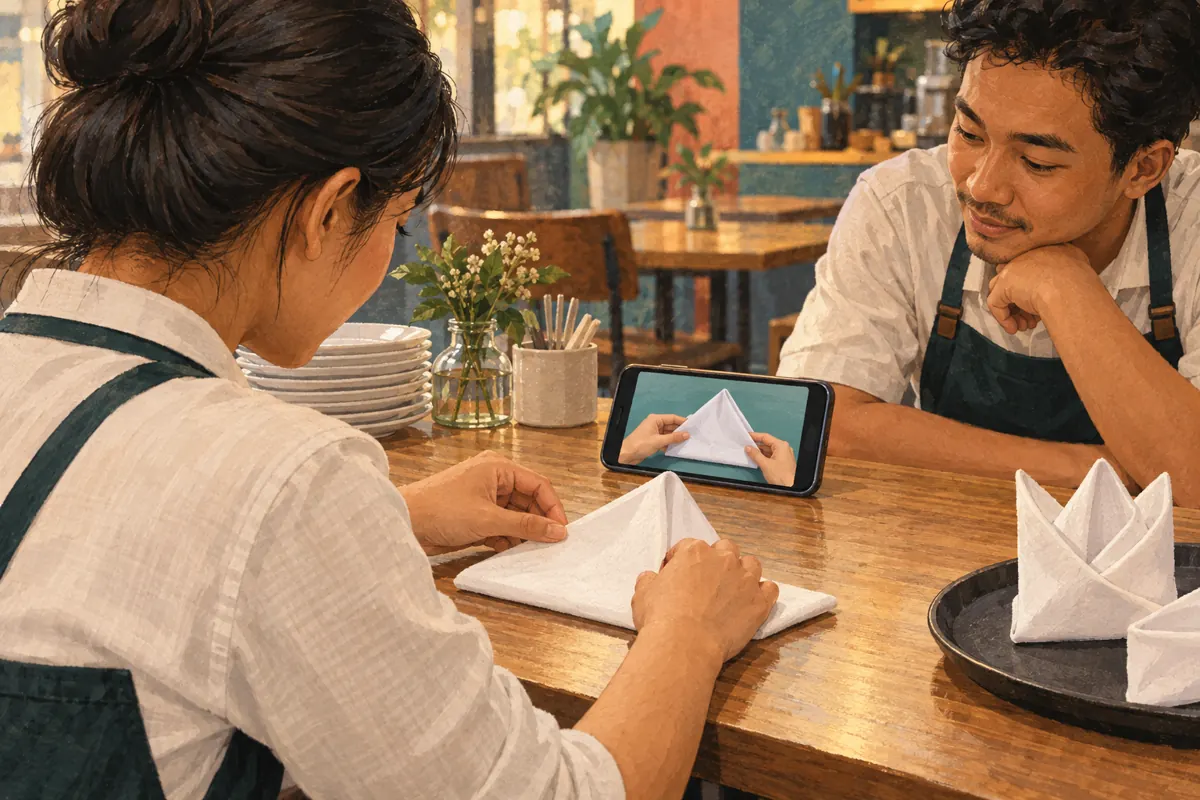
In a hypothetical Phnom Penh workshop, a teacher has recorded a lesson for café staff. Learners keep asking why their triangular fold looks uneven. The teacher chooses the moment showing corner alignment before the crease is pressed. That choice addresses a specific difficulty and gives prospective learners a fair sample of the teaching style. It does not imply that watching one excerpt replaces the full lesson.
2. Understand the boundaries of a YouTube Clip
YouTube Clips select 5–60 seconds from a source video and loop on its watch page. They are public, subject to viewers being able to access the original. A clip therefore remains connected to its source rather than becoming an independent uploaded lesson. See YouTube’s [Learn about managing Clips](https://support.google.com/youtube/answer/10332730?hl=en).
Use that format when the existing recording already contains a compact, understandable explanation. Choose the full lesson when preparation and technique need more room. Record a separate demonstration when the original camera angle hides the essential movement. These are editorial decisions: the shortest available selection is not automatically the most useful promotional asset.
For this workflow, begin with a finished workshop recording you own and have reviewed. That keeps the task focused on selecting a helpful explanation rather than solving recording problems during a live event.
3. Keep the starting position, movement and result together
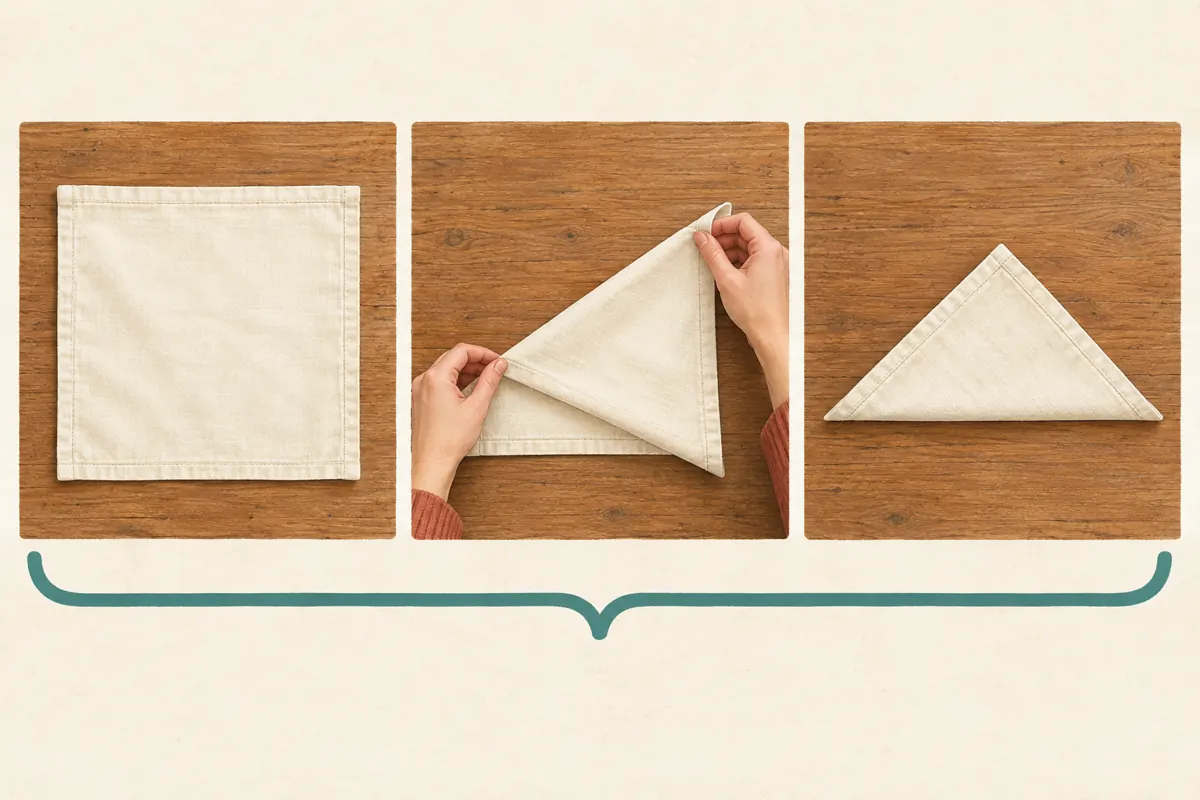
Watch the candidate moment and identify three boundaries. First, the viewer must see the fabric’s starting position. Next, the hands must perform the relevant movement without concealing it. Finally, the result must remain visible long enough to compare with the starting shape. A selection that includes all three gives a learner something they can actually inspect.
In the hypothetical alignment example, begin while the square napkin is still flat. Keep the corner-to-corner movement and the teacher’s explanation together. End after the hands withdraw and the triangle is visible. Starting with the corners already touching would remove the very information the learner needs.
Listen for references such as “this side” or “as shown earlier.” If the referenced detail falls outside the excerpt, move the boundary or choose another passage. Do not expect an attractive finished shape to repair a missing explanation.
4. Check whether the fabric changes the meaning
A cloth that holds a crease firmly may behave differently from a softer napkin used by a café. Before sharing, identify what the demonstration actually shows: the material, starting shape and any preparation that affects the result. Mention relevant limitations in the accompanying post when they cannot be understood from the excerpt.
For example, a hypothetical Siem Reap trainer demonstrates with a pressed square cloth. A suitable introduction would explain that the excerpt uses that sample and invite learners to bring their own napkin for comparison. Avoid promising the same result with every fabric or suggesting that the clip proves a particular product’s quality.
Keep the business offer equally precise. A folding class, a napkin sale and an event table-setting service are different offers. The post should identify which one the workshop actually provides so interested viewers know what they are enquiring about.
5. Create the clip and give it a narrow title
On a computer, sign in, open the source video and choose More, then Clip. Select the interval, add a title and use Share clip to copy the link. YouTube permits clip titles up to 140 characters. Its [computer instructions](https://support.google.com/youtube/answer/10332730?hl=en&co=GENIE.Platform%3DDesktop) describe the controls.
A hypothetical title such as “Align the corners before pressing the napkin fold” tells the viewer what to inspect. “Master every restaurant fold instantly” would promise far more than the excerpt demonstrates. Write the title after choosing the boundaries so the wording describes the actual selection.
Keep a brief internal note containing the source link, clip link, selected passage and intended question. Add the reviewer’s name. This helps a colleague share the approved excerpt without accidentally substituting a similar-looking demonstration that teaches another step.
6. Test the shared link with someone who missed the lesson
Ask a colleague who has not watched the full recording to open the copied link on a phone. Give them a comparable napkin, but do not explain the movement first. Ask what starting shape they see, which corner moves, and what the finished step should look like. Their hesitation can reveal an unclear boundary more effectively than the editor’s repeated viewing.
Test the sound and the picture separately. Listen for a sentence cut in half. Then watch without sound to check whether hands, folds and fabric edges remain distinguishable. A silent viewing test does not replace spoken instruction; it reveals how much information depends on hearing the explanation.
If the colleague succeeds only after your additional explanation, record what you had to say. Decide whether that information belongs in a longer selection, the accompanying post, or a new demonstration. Do not describe an assisted test as proof that the excerpt works independently.
7. Share it with one useful next action
Build the promotional post around the same question as the clip. A hypothetical English draft might say: “Uneven triangle? Watch how the corners are aligned before the crease is pressed. For our next café-team folding session, message us with your group size and preferred day.” Use a carefully reviewed Khmer version when that is the audience’s working language.
Keep confirmed workshop details beside the invitation: location, teaching language, what participants bring, and how to request current availability. If a date is undecided, say so. Do not place an old price or an expired registration deadline in reusable promotional wording.
Choose a relevant sharing destination where workshop information is welcome. Explain why the excerpt helps that audience instead of dropping an unexplained link. For café supervisors, the practical angle might be a consistent starting fold; for hobby learners, it might be recognising the correct corner orientation.
8. Apply a clear SMM-panel decision rule
The supplied boost-live.com catalogue includes “YouTube Like ~ Max 50k ~ 50k/days ~ Instant ~ 𝗥𝗘𝗙𝗜𝗟𝗟 30D”. Its title identifies a likes offering, but the brief supplies no description. The wording alone does not establish its delivery method, policy compliance, suitability for a Clip URL, audience location or business value. Treat the speed and refill language as catalogue claims, not verified outcomes.
YouTube prohibits artificial increases in views, likes and other engagement, and warns that a hired promoter’s actions can affect the channel. Review its [Fake engagement policy](https://support.google.com/youtube/answer/3399767?hl=en-uk) before commissioning promotion. Decline services that artificially inflate engagement; an available order form does not establish an acceptable method.
For this workshop, the immediate decision is whether the excerpt helps someone understand the step and request relevant information. Purchased engagement is not evidence of genuine interest, sales, ad delivery or Cambodian users. If a provider cannot explain a proposed method clearly enough to assess it, leave the request unsubmitted and continue improving the demonstration and its legitimate distribution.
9. Separate viewing activity from workshop demand
Keep three distinct observations in the review: what people watched, what they asked, and what they booked. YouTube Studio provides clip information including views and creators under Clips, as explained in its [management guide](https://support.google.com/youtube/answer/10332730?hl=en). Those records still need interpretation alongside actual conversations.
In a hypothetical review, several people might ask whether their own napkins are suitable while nobody requests a class date. That suggests the excerpt raised a material question; it does not demonstrate booking demand. The next useful content could compare the workshop’s sample with another cloth, while the booking invitation may need clearer information about the session.
Record enquiries in plain categories such as technique question, material question, schedule request and confirmed booking. Count a booking only after your usual confirmation process. When someone says the clip helped them find the workshop, retain that as reported attribution rather than proof that the clip alone caused the sale.
10. Review the excerpt when the source or offer changes
YouTube says clips are removed when their original video is deleted or made private. Check shared destinations before changing the source. See its [clip availability guidance](https://support.google.com/youtube/answer/10332730?hl=en). Keep the clip’s source link in the workshop’s content record so this dependency is easy to find.
Also review the surrounding offer whenever the venue, teaching format or included materials change. A technically correct excerpt can still sit inside a misleading old promotional post. Update the posts you control and give staff the current approved wording for future shares.
Common mistakes include selecting only the final reveal, cutting away the material explanation, using a title broader than the lesson, and treating a larger counter as a reason to spend more. Assign one person to check the instruction and another to check the offer. If either review fails, correct the relevant part before distributing the link again.

Frequently asked questions
Should the clip show the whole napkin design?
Only when the complete design fits naturally and remains easy to follow. Otherwise, choose one complete step and identify its place in the lesson. A clear alignment demonstration is more useful than a rushed sequence that hides how the base was formed. Provide the full lesson for learners who need the surrounding stages.
What if the useful explanation is too long?
Share the full lesson or record a shorter explanation specifically for that question. Do not remove a necessary preparation step merely to fit the excerpt. You can also narrow the question: demonstrating corner alignment may be manageable even when teaching the entire decorative fold requires a longer lesson.
Can the workshop use a learner’s appearance in promotional excerpts?
Ask for clear permission covering the intended promotional use before selecting footage featuring an identifiable learner. A practical alternative is to use an instructor-only tabletop demonstration. Check the background for names, booking notes and other personal details. Participation in a class should not be treated as automatic agreement to appear in its marketing.
Does a high like count mean Cambodian café teams want the class?
No. A like count does not establish the viewer’s location, occupation, learning needs or intention to book. Ask interested people what kind of session they need and record their replies. The stronger planning evidence is a specific enquiry about group size, teaching arrangements or an available date, followed by your normal booking confirmation.
When should the team stop revising the clip?
Stop when the selected step is accurate, an unfamiliar reviewer understands it, the shared link works, and the accompanying offer is current. Further changes should respond to a concrete problem, such as repeated confusion about the starting position. Avoid endless cosmetic revisions when the real unanswered question concerns the workshop schedule or materials.
Explore the current service catalogue, create an account, or ask a specific question through support tickets.
- YouTube Help: Learn about managing Clips
- YouTube Help: Learn about managing Clips — Computer
- YouTube Help: Fake engagement policy
Prepared with AI assistance. Illustrations explain the workflow and do not represent customer results.