21/10/2026 10:11
Reply Received or Repair Booked? Telegram Away Messages for Cambodian Suitcase Shops

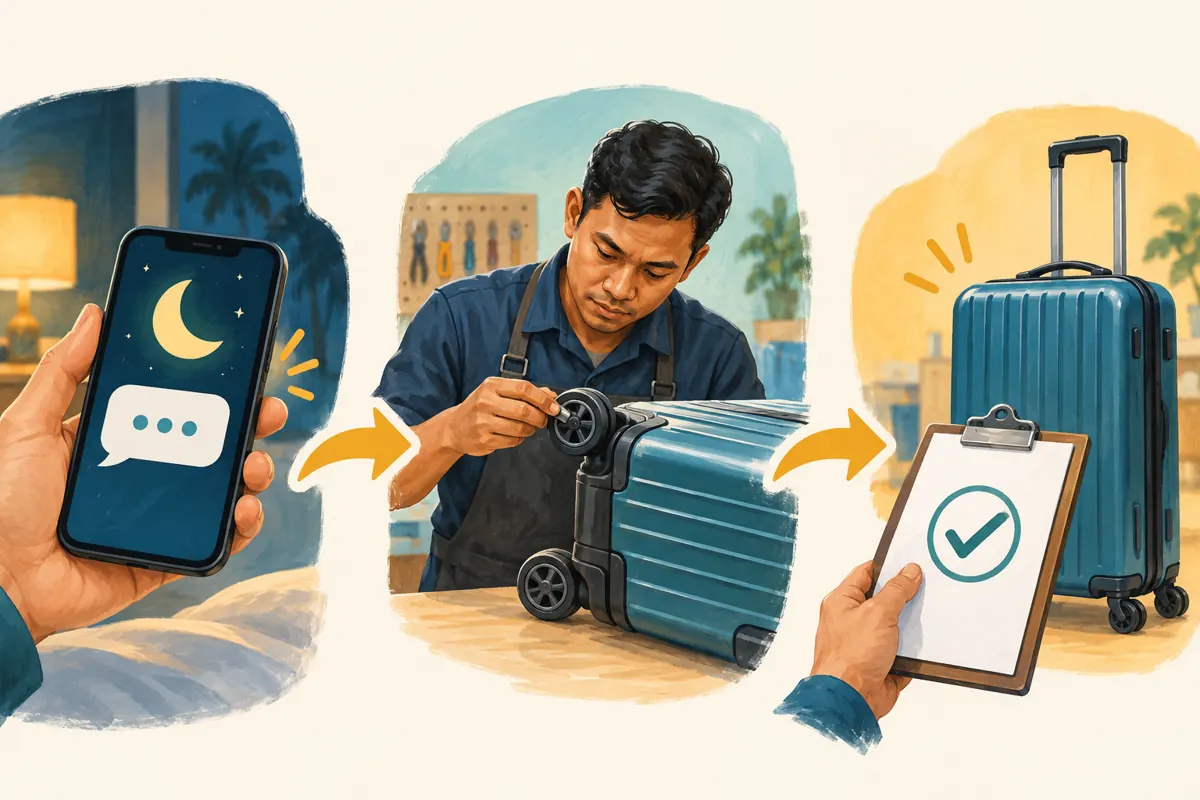
A suitcase wheel breaks in the evening, and its owner finds your repair demonstration on social media. They send a Telegram message asking whether you can fix it before their next trip. An automatic response can explain what happens next, but careless wording can make them believe that a technician has accepted the job. For Cambodian suitcase repair shops, the useful role of an away message is to make the waiting period understandable and help customers prepare the information a person will need. This workflow connects after-hours communication with responsible promotion, including decisions about SMM panel services, without treating an automated reply as a booking or a public view count as customer demand.
1. Identify what the customer could misunderstand
Start with the journey from your promotional post to the private conversation. A video might show a successful wheel replacement, while its caption invites viewers to send a photo. Someone arriving after closing may assume that the demonstrated repair is available for every suitcase. If the automatic reply says “We will repair it tomorrow,” the shop has promised a result before checking the housing, replacement part or workload.
In a hypothetical Phnom Penh workshop, a customer sends a close-up of a loose wheel shortly after staff leave. The visible problem could involve the wheel, its mounting or the surrounding shell. The away message should acknowledge the enquiry, state when staff review messages and explain that availability requires inspection. This gives the customer a useful next step without deciding the repair in advance.
2. Understand what Telegram's feature controls
Telegram describes away messages as automatic messages for periods when a business cannot respond, including closures and holidays. Its documentation provides schedule options for always sending, sending outside business hours and sending during a custom period. Recipient settings determine which conversations are eligible. These controls govern delivery conditions; the shop must still write accurate content and arrange human follow-up.
Look in Settings > Telegram Business and check the options available to your account. Telegram's introductory announcement located its business features there and described Premium access at launch; verify current access in the app before paying for anything. Choose the away-message feature for periods of unavailability. A friendly first-contact greeting serves a different purpose and may leave an evening customer unsure when a person will actually respond.
3. Choose a schedule that matches message coverage
Decide when someone can genuinely review repair enquiries. Workshop opening time and message-review time may differ: staff could open the shutter while unloading supplies, then examine incoming photos later. Write the response window around that reality. If the team cannot reliably answer every enquiry immediately after opening, avoid promising an exact reply minute.
Use the outside-business-hours option when your configured hours accurately represent the relevant availability. Consider a custom period for a planned closure, such as a holiday break or workshop move. For a Cambodian holiday closure, include the actual reopening date in the message instead of relying on “tomorrow.” Assign someone to check the message when normal work resumes. A correct schedule cannot rescue wording that still describes last week's closure.
4. Write an acknowledgement with a clear boundary
Build the message around four elements: the fact that it is automatic, the next review window, the information needed and the limits of the acknowledgement. Keep the most useful sentence near the beginning so customers can understand it on a small screen. Use the language your customers understand; if you provide Khmer and English versions, check that both express the same response window and booking conditions.
A hypothetical English template is: “Automatic reply: our repair team is currently away. We review new enquiries during our next opening period. Please send a full suitcase photo, a close-up of the damaged area and your required completion date. We will check the repair options before confirming a price or collection arrangement. This message does not reserve a repair slot.” Replace the general opening-period reference with a verified day or window when practical.
5. Request photos that support the next decision
Ask for enough context to start a review without turning the reply into a long questionnaire. For a wheel problem, a full suitcase photo and a close-up showing the wheel attachment can be more useful than several nearly identical images of the tread. Explain that photographs support an initial assessment and that staff may still need to inspect the item physically.
Request the customer's required completion date because it changes the conversation, but avoid promising that the deadline can be met. Ask for an approximate area only if it helps assess a genuine collection option. Customers should remove or cover luggage tags and travel documents before photographing the case. Do not request passport images, booking confirmations or payment details merely to understand a damaged wheel.
6. Check recipients and the offline-only condition
Telegram allows automated business messages to exclude particular chats or categories. Review those choices deliberately. A shop owner may use the same account for suppliers, staff and customers, so a blanket reply can create confusing messages in conversations that already have a different arrangement. Conversely, excluding all contacts could leave saved customer contacts outside the intended coverage.
If you enable the offline-only setting, account activity matters. Telegram's technical documentation states that this condition suppresses the away message when the account was online within the previous ten minutes. That can explain why an evening test does not produce the expected reply. Decide whether the shop needs replies based primarily on its schedule or also on account activity, then test the configuration you actually intend to use.
7. Test the customer's experience before promotion
Use consenting colleagues or a separate account you control to check the setup. Test an eligible customer conversation during the intended away period, then check a deliberately excluded conversation. Where your recipient choices distinguish contacts and non-contacts, include both in the review. Record the time, relevant settings and observed result so a missing response leads to a specific configuration check.
Read the delivered message as though you were travelling soon and needed a definite answer. Does it sound like a reserved slot? Does it explain when a human will review the photos? Can someone tell whether collection has been arranged? Check during normal availability as well. If the experience is inconsistent, resolve it before distributing a promotional post that directs additional enquiries into the same chat.
8. Keep panel services separate from reply automation
The supplied public catalogue includes the exact service name “Telegram - Views ~ 1 POST ~ INSTANT.” Its title identifies a single-post views offering, but the brief provides no description. It therefore supplies no evidence about audience location, delivery method or suitability for a particular campaign. The word “INSTANT” is part of the catalogue label, not an independently verified timing commitment.
That listing does not establish an away-message setup service, private-chat response coverage or repair enquiries. Purchased engagement is not evidence of genuine interest, sales, advertising delivery or Cambodian users. If your objective is better handling of evening repair questions, first improve the reply and staff workflow. Any later panel-service review should remain separate, with its own documented scope and a check of applicable platform rules.

9. Align the promotional invitation with the reply
Read the post caption and away message together. A caption inviting people to “send photos for an assessment” fits a reply explaining that staff will review the damage later. A caption promising immediate quotes creates a conflict if the next message says nobody is available. Correct that conflict before sharing the post through other channels or considering any related service request.
In a hypothetical Siem Reap shop campaign, the video demonstrates one wheel assembly replacement. The caption can identify it as an example and invite viewers to submit their own damage photos. The away reply then explains the review window and requests the required completion date. Neither piece should suggest that every suitcase uses the same assembly or that sending a message guarantees a repair before departure.
10. Give the morning review a named owner
An away message creates an expectation of later attention. Assign one person to review incoming conversations at the agreed window and another to cover absences. For each enquiry, decide whether the next step is requesting a clearer photo, checking a part, arranging inspection or explaining that the shop cannot assess the work remotely. Avoid asking customers to resend details already present in the conversation.
Keep a simple internal record of the enquiry, its next action and the staff member responsible. Treat assessment, quotation, customer acceptance and collection arrangements as separate decisions. When a person replies, refer to the actual issue: “We can see damage around the wheel mounting and need another angle” is more useful than repeating the automated acknowledgement. Confirm only what the workshop has checked.
11. Review confusion instead of celebrating automatic replies
After using the workflow, examine whether customers still ask when the shop will answer, whether photos show the relevant damage and whether anyone mistakes the reply for a booking. These observations can guide specific edits. If customers repeatedly omit the mounting area, clarify that photo request. If the team misses its stated review window, change staffing or the promise rather than simply making the message friendlier.
Common mistakes include leaving an expired holiday date in place, excluding returning customers unintentionally, testing while the offline-only condition suppresses replies and counting automatic acknowledgements as completed support. Keep panel delivery records separate from conversation outcomes. A post-view total cannot tell you whether a repair was suitable, a quote was accepted or a customer collected a finished suitcase.

Frequently asked questions
Can an away message confirm a repair price?
The shop should confirm a price only when it has enough information and authority to do so. For suitcase damage that may involve hidden mounting problems or unavailable parts, an automatic reply should explain the assessment process. If you publish a standard inspection charge, distinguish that charge clearly from the eventual repair price.
Why might a customer receive no away reply after closing?
Check whether the schedule is active, whether the conversation is eligible under your recipient settings and whether offline-only delivery is enabled. Recent account activity can affect that last condition. Reproduce the situation with a consenting tester and record the settings before changing several options at once.
Should returning customers be excluded?
Base the choice on how your team handles existing work. Returning customers may need the same closure information as new customers. If some ongoing repair conversations have individual arrangements, consider those separately rather than assuming every saved contact should be excluded. Test a representative returning-customer conversation.
What if the customer needs a repair before the next review window?
State the shop's availability honestly. If you have a genuinely staffed alternative contact method, explain its limited purpose and hours. Otherwise, avoid implying that an urgent message moves automatically to the front of a queue. The customer needs enough clarity to decide whether to seek another option.
Will buying Telegram post views improve this workflow?
A post-view service does not establish better reply coverage, suitable repair enquiries or accepted quotations. Those outcomes depend on the invitation, the customer's needs and the workshop's response. Assess the away-message workflow using actual conversations and follow-up records, while keeping any purchased engagement figures separate.
Explore the current service catalogue, create an account, or ask a specific question through support tickets.
- Telegram: Introducing Telegram Business
- Telegram Business technical documentation: Away messages
- Telegram businessAwayMessage: Schedule, recipients and offline-only condition
- Telegram BusinessRecipients: Eligible and excluded chats
Prepared with AI assistance. Illustrations explain the workflow and do not represent customer results.